Kia AC Repair Services in Bluffton, SC
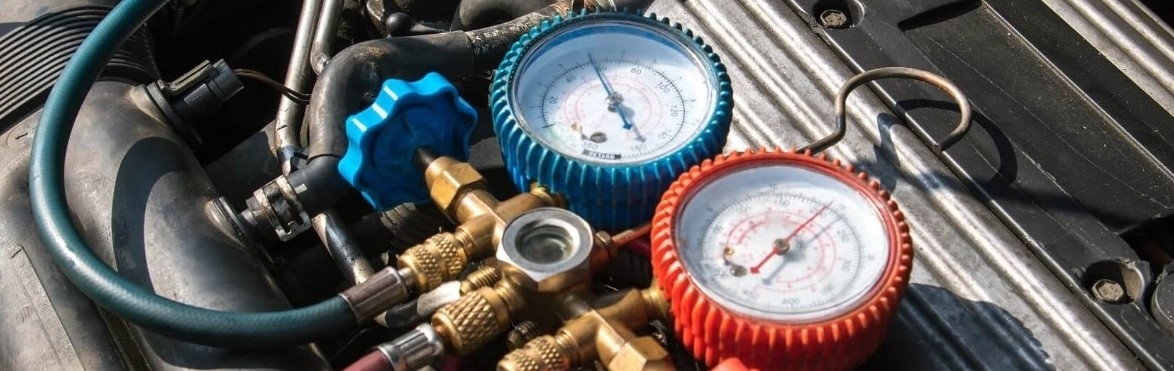
Tested First: AC Repair That Holds Up
A car that spent the off-season in a garage or a driveway can greet its owner with a squeal and a dash vent that never turns cold. The service department at Kia Country of Hilton Head in Bluffton, SC treats that first spring start-up as a diagnosis job, so nothing gets replaced until the cause is proven. Our technicians handle air conditioning on all makes and models, from island runabouts to three-row family haulers. A typical visit begins under the hood with the belt that turns the compressor, then moves to the seals and pressures inside the system itself. You get a plain account of what the months of sitting did and did not affect.
Where AC Parts Sit in the Vehicle
On most gasoline engines the AC compressor has no motor of its own; it borrows power from the crankshaft through the same ribbed accessory belt that spins the alternator and often the water pump. A spring-loaded tensioner keeps that belt pressed against every pulley, and the compressor's front pulley only grips well when the belt has firm, clean contact. Switching the AC on adds a sudden load to that belt, so any weakness in the drive shows up right at that moment.
Inside the sealed loop, refrigerant carries a small amount of lubricating oil wherever it travels. Each time the system runs, that oil washes over the compressor's moving parts and wets the rubber seals at hose joints and at the spot where the compressor's shaft leaves its housing. Rubber kept wet with oil holds its give, while rubber left dry and still for a long spell can take a set and stop sealing as tightly.
- The belt tensioner uses an internal spring and a pivot arm, and a tired spring lets the belt flutter or slip under the extra pull of the compressor.
- Idler pulleys guide the belt around the engine, and their sealed bearings can grow noisy or stiff after a long period without turning.
- Many compressors engage through a clutch on the front pulley while others vary their output internally, and both designs depend on the belt to turn at all.
- The condenser and evaporator do not wear out from sitting, but the joints between them rely on rubber seals that can seep after a long idle stretch.
- A ribbed belt wears by losing material from its grooves as well as by cracking, so a belt can look intact and still ride too deep in the pulleys to grip well.
On most vehicles the defrost setting brings the compressor on whenever conditions allow, so a season of foggy-morning drives gives the system a regular workout. A car that sits untouched in a garage from late fall until spring gets none of that, and the oil settles in the low spots of the loop. Starting the engine and running the AC for a short while during an occasional visit, or asking a neighbor to do it, keeps the seals wetted between seasons.
A parked car is often treated as a car at rest, with nothing wearing out while it waits. Rubber keeps aging whether or not the wheels turn, and a belt that sat bent around the same pulleys for months can come back glazed, stiff or cracked. The seals inside the loop age the same way, so a system that worked perfectly the day the car was parked can leak or slip the day it returns to service. Low mileage does not mean low wear for these parts.
What to Watch for in Your Air Conditioning
The clearest warning sign is a sharp squeal in the first seconds after start-up that grows louder the moment the AC button is pressed. That noise means the belt is sliding across a pulley under load, and a belt that slips cannot turn the compressor at the speed it needs to move refrigerant.
Warm air that follows the squeal is easy to blame on the compressor itself, yet the compressor may be perfectly healthy and simply not being driven hard enough. A slow, quiet loss of cooling over the first few weeks back on the road points somewhere else, toward a seal that dried out over the off-season and has started to seep. Telling those two patterns apart is the first job of the visit.
- A chirp that repeats in step with engine speed, which often points to a belt riding slightly out of line or a worn pulley groove.
- A tensioner arm that jumps or shakes visibly when the AC engages, a sign its spring can no longer hold the belt steady.
- Shiny, hardened belt ribs or small cracks running across them, visible with the engine off and a flashlight.
- A faint oily film on a hose joint or on the compressor's front face after the system runs for the first time in months.
- A growl from the front of the engine that stays even with the AC off, which can mean an idler pulley bearing rather than the compressor.
Not every start-up squeal belongs to the AC. A power steering pump on older vehicles, a water pump bearing or the alternator pulley can make a similar noise on the same belt, and a belt splashed at a car wash can chirp for a short while until it dries. A technician isolates each pulley so the repair goes to the part that is actually slipping or failing.
Ignoring a slipping belt carries a risk beyond comfort. On many engines that one belt also turns the alternator and the water pump, so a belt that finally breaks can leave the car without cooling for the engine as well as the cabin. Replacing a glazed belt and a weak tensioner before the season starts is a modest job compared with a tow from the middle of the US-278 bridges in heavy traffic.
Which AC Visit Fits
The three services below follow a parked car back into daily use, from the belt that drives the compressor to the seals and refrigerant level inside the loop.
Accessory Belt, Tensioner and Pulley Inspection
The technician checks the ribbed belt for glazing, cracks and groove wear, and a wear gauge can show whether the ribs have worn too deep to grip. The tensioner arm is watched with the engine running and the AC switched on, since a weak spring tends to reveal itself only under compressor load. Each idler pulley is spun by hand with the belt off to listen and feel for a rough bearing. A worn belt, tensioner or pulley is replaced, and the belt routing is confirmed against the diagram for your engine.
Seasonal Seal and Leak Survey
Once the drive is sound, attention moves to the sealed loop, where months without circulation can let a seal begin to seep. Hose joints, the compressor body and both access ports are swept with a refrigerant sniffer, and tracer dye can go in where a slow seep needs a few drives to mark itself. System pressures are read with the engine running so a low level is confirmed by measurement and not by feel. Any seep found is shown to you along with an estimate before a seal or hose is replaced.
Pre-Season Cooling Run and Vent Test
A car returning from storage gets a full cooling run with the cabin closed and the fan on high, long enough for the compressor and the cooling fans to cycle the way they will in daily driving. Vent temperature is logged at the start and at the end of the run, giving you a baseline to compare later in the year. The technician also listens for the compressor to engage cleanly and watches that it does not drag the idle down. A cabin filter packed with debris can skew the airflow reading, so its condition is noted on the report.
From the First Squeal to Cold Vents Again
The visit begins with a short history of the car's off-season, including roughly how long it sat, whether anyone started it while you were away and what you heard on the first drive back. A technician then starts the engine cold with the hood open, because the first minute after a long sit is when a belt problem is easiest to hear.
Imagine an owner who returns to a home near Sun City Hilton Head after a long stretch away, turns the key and hears a shriek from under the hood, followed by vents that stay lukewarm all the way down Bluffton Parkway. A friend says the compressor has seized, and a replacement quote follows. With the belt removed, the compressor spins freely by hand, but the accessory belt is glazed and cracked and slides on the compressor pulley each time the clutch engages. A new belt, with the tensioner checked and replaced where it is weak, brings back both quiet start-ups and cold air while the original compressor stays in service.
- The belt, tensioner and every pulley are checked first, with and without the AC load, so a drive problem is ruled in or out before the refrigerant side is touched.
- Static and running pressures are read to confirm whether the loop lost refrigerant while the car was parked.
- Seals, hose joints and the compressor's front face are searched for the oily trace a slow seep leaves behind.
- Nothing is swapped on a guess, and the estimate you sign off on names each part next to the reading that condemned it.
After the repair, the engine runs with the AC on maximum while the technician watches the tensioner arm hold steady and listens for any remaining chirp. If the loop was opened, it is evacuated and held under vacuum before refrigerant goes back in by weight. Vent temperature is then measured and compared with the reading taken at check-in, and a short drive confirms the cooling holds once the car is moving.
A convertible back from a winter in the garage and a minivan that only needs its belt replaced can share the same morning, because the shop takes all makes and models. A belt and tensioner job often finishes before closing on the day it arrives, when the schedule and parts allow, and any part that must be special-ordered is flagged at check-in.
Trusted by Owners Around Bluffton for AC Care
Belt routing and compressor mounting vary between Kia engine families, and the factory-trained team at Kia Country of Hilton Head works from Kia service information for the exact engine under your hood. Kia diagnostic software can display climate data and command the compressor during a test, which helps separate a drive fault from a control fault.
On a Sorento or a Soul, the belt, tensioner and refrigerant specifications are confirmed against your VIN before parts are ordered. Some engines use a specific rib count or a stretch-fit belt design, and matching the part number avoids a belt that looks right but does not hold tension.
- Genuine Kia belts, tensioners and AC seals can be ordered when you prefer parts built to the original specification.
- Your Kia's service history is checked for open campaigns and earlier belt work, so nothing already done is repeated.
- Belt condition and vent temperature from this visit are recorded, so next spring's check has a real starting point.
Find Kia Country of Hilton Head in Bluffton, SC
AC Repair for Drivers All Around Bluffton
Many owners around Sun City Hilton Head and in second homes on Hilton Head Island leave a car parked for months at a time, and its first drive back often lands in slow traffic over the US-278 bridges. Those first miles at a crawl, with the AC working hard and little air moving through the grille, are where a tired belt or a dried seal gives itself away, and drivers from across the Lowcountry bring those cars to Kia Country of Hilton Head for a start-up check.
- Hilton Head Island, SC
- Okatie, SC
- Hardeeville, SC
- Ridgeland, SC
- Pritchardville, SC
- Port Royal, SC
- Beaufort, SC
- Burton, SC
A start-up check before the season gets busy takes less time than a roadside stop in island traffic. It also sends a parked car back to daily use with a sound belt and a sealed system.
Common Questions on AC Work
Owners who park a car for part of the year tend to ask us these questions when they return.
Q: My car sat in the garage for months; what should I listen for when I start it?
Q: Why does the squeal get louder when I turn on the AC?
Q: Can a car lose refrigerant just from sitting?
Q: Is it worth starting my car now and then while I am away?
Q: Which vehicles does your service department accept for AC and belt work?
Before your visit, jot down how long the car sat and what you heard on the first start, and share it with your advisor when you book.
Recording the sound on your phone at start-up gives the technician something to compare against.
Arrange AC Repair at Kia Country of Hilton Head
A belt that slips today wears the pulley grooves a little more on every start, and a seal that seeps loses oil along with refrigerant. A spring check keeps the work to a belt, a tensioner or a single seal while the compressor is still sound.
The estimate separates the drive parts from the refrigerant side, so you can approve the belt work today and decide on a seal repair after seeing the readings. Work starts only after you say yes.
A spring start-up check can be booked online or by phone with Kia Country of Hilton Head before the car's first long drive of the season. Mention how long it sat and whether anyone ran it while you were away.
Service Specials


Cannot be used with any other coupons or discounts

Synthetic Oil & Filter Change, Tire Rotation, & Multi-point inspection. - Cannot be used with any other coupons or discounts

Any Service (Excluding Oil Changes) - Cannot be used with any other coupons or discounts